Ethnographic Research
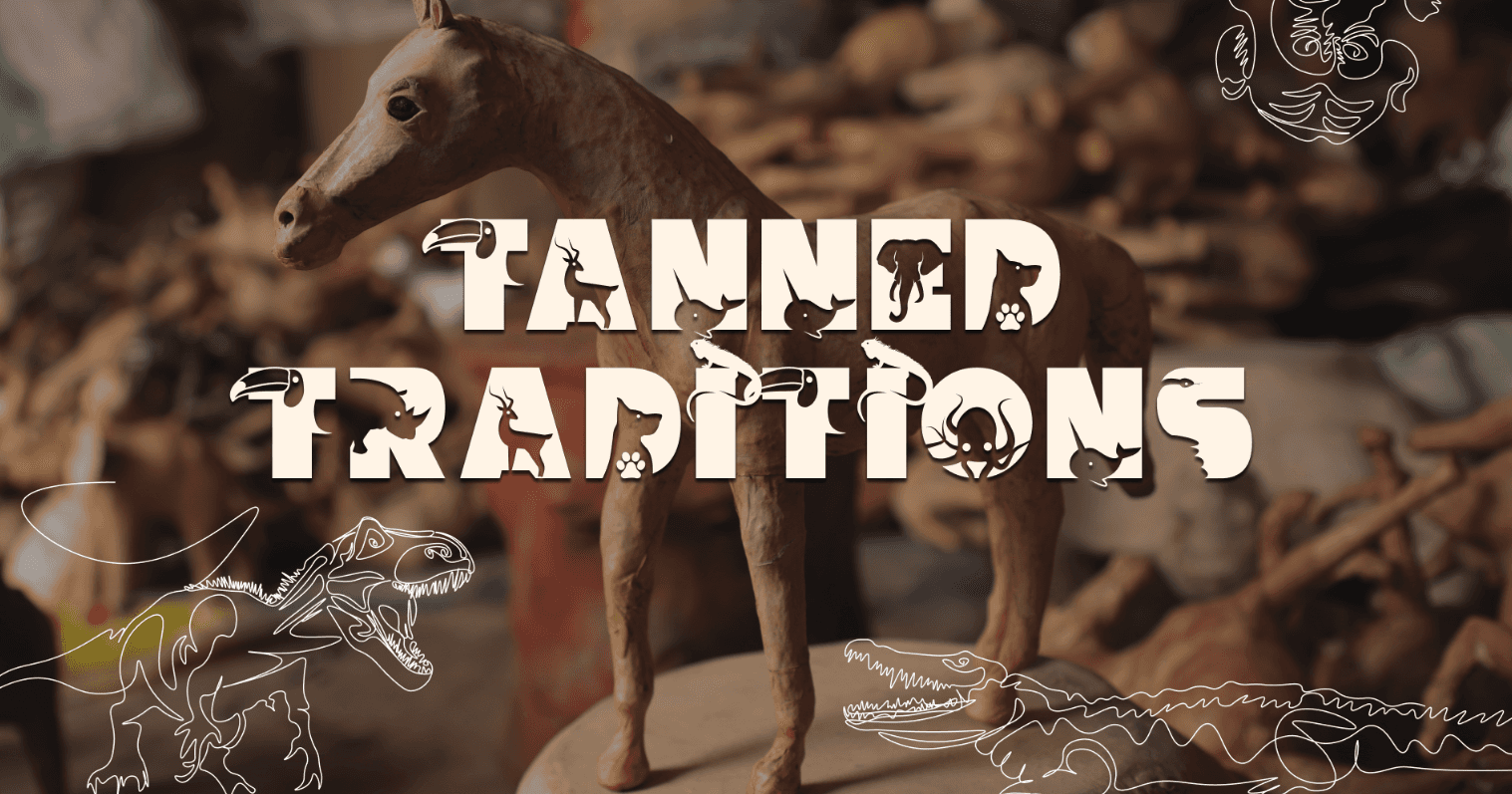
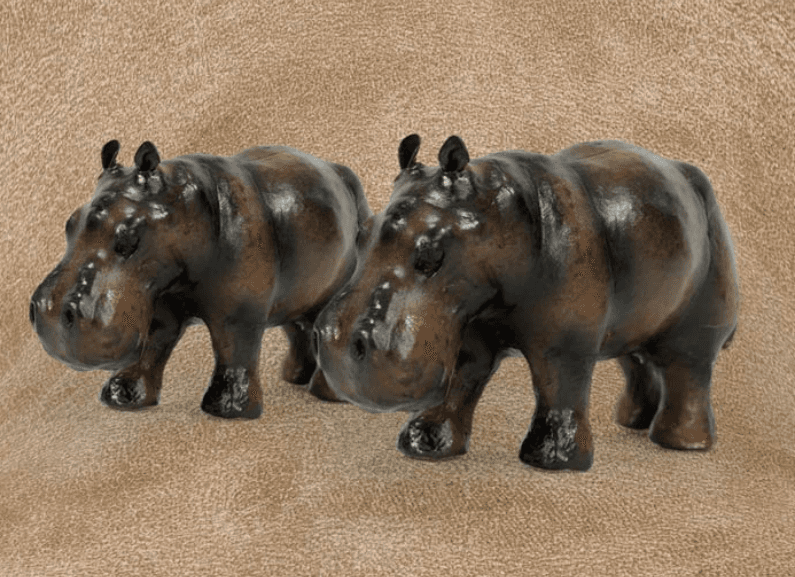
The ethnographic research is based upon the lifelike animals made from plain leather, stemming from taxidermy influence. Initiated by Gaffar Khan it symbolizes Indore's artistry and had gained worldwide recognition.
Research work flow
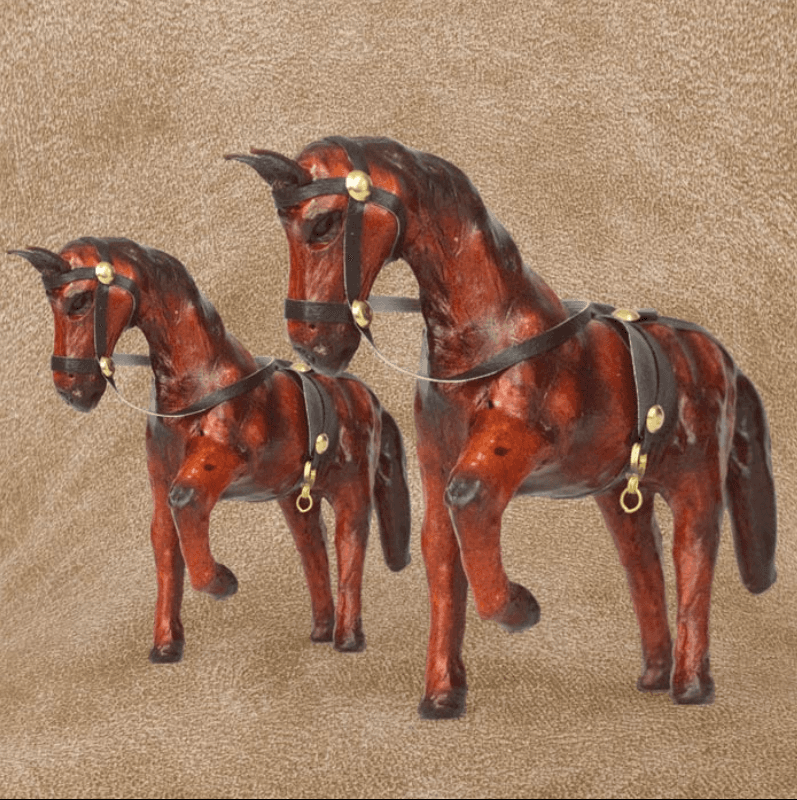
This project is a deep-dive ethnographic study into one of Indore's most overlooked yet culturally rich craft traditions hand stitched leather toys, a GI-tagged heritage craft passed down through generations of artisan communities. Ranging from few inches to several feet tall figures showcasing rich tradition and skilled craftmanship.The project involved conducting ethnographic research, documenting the research process, understanding culture, traditions and social dynamics. Also captured detailed field notes and conducted interviews. Then analysed the findings to draw insights and understand the art better.
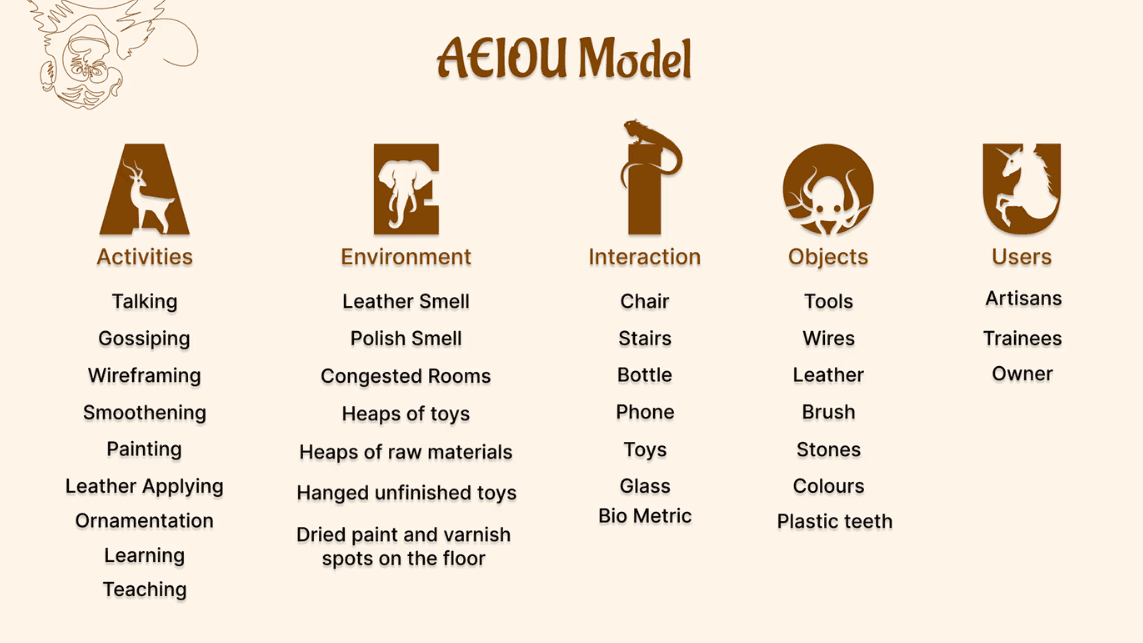
The AEIOU framework is a mnemonic, heuristic tool used in this ethnographic research and to interpret qualitative field observations. It organizes data into five categories Activities, Environments, Interactions, Objects, and Users, helping researchers turn raw, contextual observations into actionable insights.

My roles and responsibilities included —
Planning and conducting ethnographic research
Field visits and contextual inquiry
Interviewing artisans and craft practitioners
Documenting observations through photography and notes
Synthesizing qualitative data
Creating visual narratives and research presentations
Identifying key cultural and economic insights
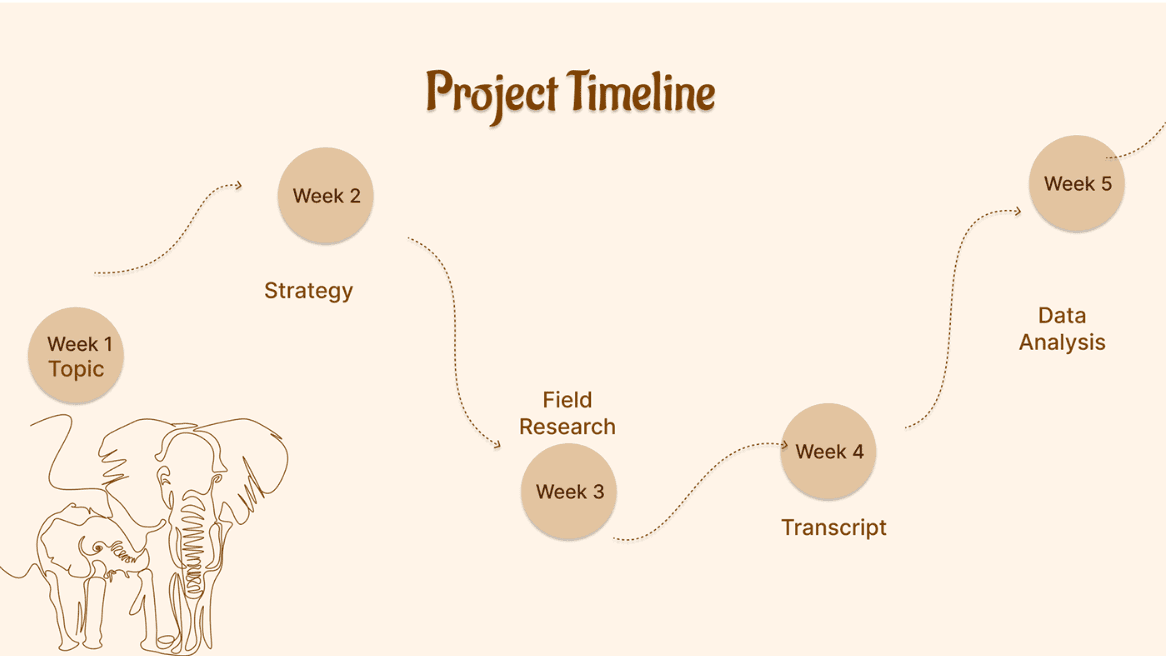
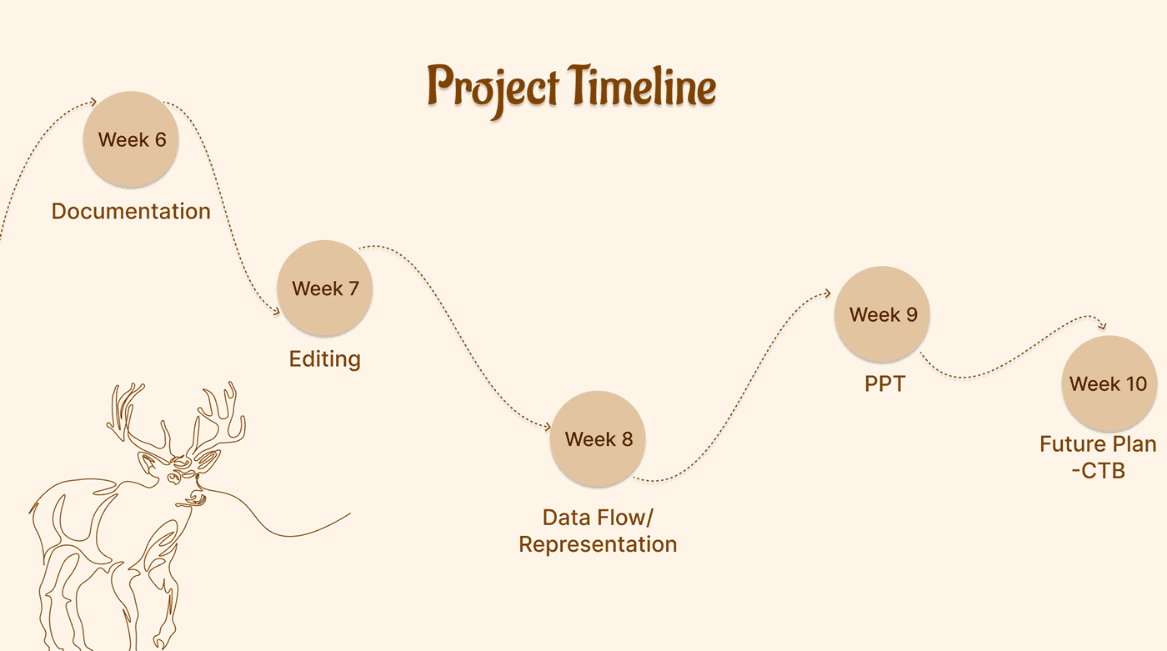
The project duration was 10 weeks long and each week was dedicated for a specific process. Week 1 was spend selecting the topic of research followed by developing the strategy to conduct the research in week 2.
Week 3 was spend conducting the research in the field. During this week first day was spend observing the artisans and their working habits. Second day we conducted interviews and factory visit. On the third day we learned the process of toy making and also trying doing it ourselves and also documented the factory layout. Fourth day was spend conducting few more interviews and conducting our filed visit.
Week 4 was spend doing the transcripts and week 5 doing the analysis. Week 6 and 7 was spend in documenting and editing. And week 8 and 9 was spend in making data flow and presentation. Lastly week 10 for discussing future plan.
The research highlighted not only the craftsmanship behind each handmade toy but also the socio-economic challenges faced by artisans in sustaining their livelihoods in a rapidly changing market. It emphasized the importance of documenting and promoting traditional knowledge to ensure its preservation for future generations.
This project reinforced the value of ethnographic research as a tool for uncovering human stories, cultural practices, and contextual insights. It strengthened my abilities in qualitative research, observation, interviewing, and visual storytelling while deepening my appreciation for the role of design research in preserving cultural heritage. Ultimately, the project demonstrated how thoughtful documentation and research can contribute to creating awareness, fostering appreciation, and supporting the continuity of traditional crafts.
Click below to check out the whole project.